Medical Billing and Coding Professionals Healthcare and IT Company

Wound Care Billing Services In USA
Wound care billing is one of the most complex areas of medical billing. It involves long-term patient care, repeated treatments, strict documentation rules, and close payer review.
Even small errors in coding or documentation can lead to denials, delayed payments, or audits.
Our wound care billing services in the USA are designed to support wound care clinics, hospital-based wound centers, and specialty practices by improving reimbursement accuracy, reducing denials, and maintaining full compliance with payer guidelines.
Stop revenue loss in your wound care practice with specialized wound care billing services built for accuracy and faster payments.
Our experienced team uses smart revenue cycle strategies to reduce errors, speed up claim processing, and strengthen cash flow — delivering fewer denials, a 98% clean claim rate, and up to 15–25% higher collections within the first 90 days.
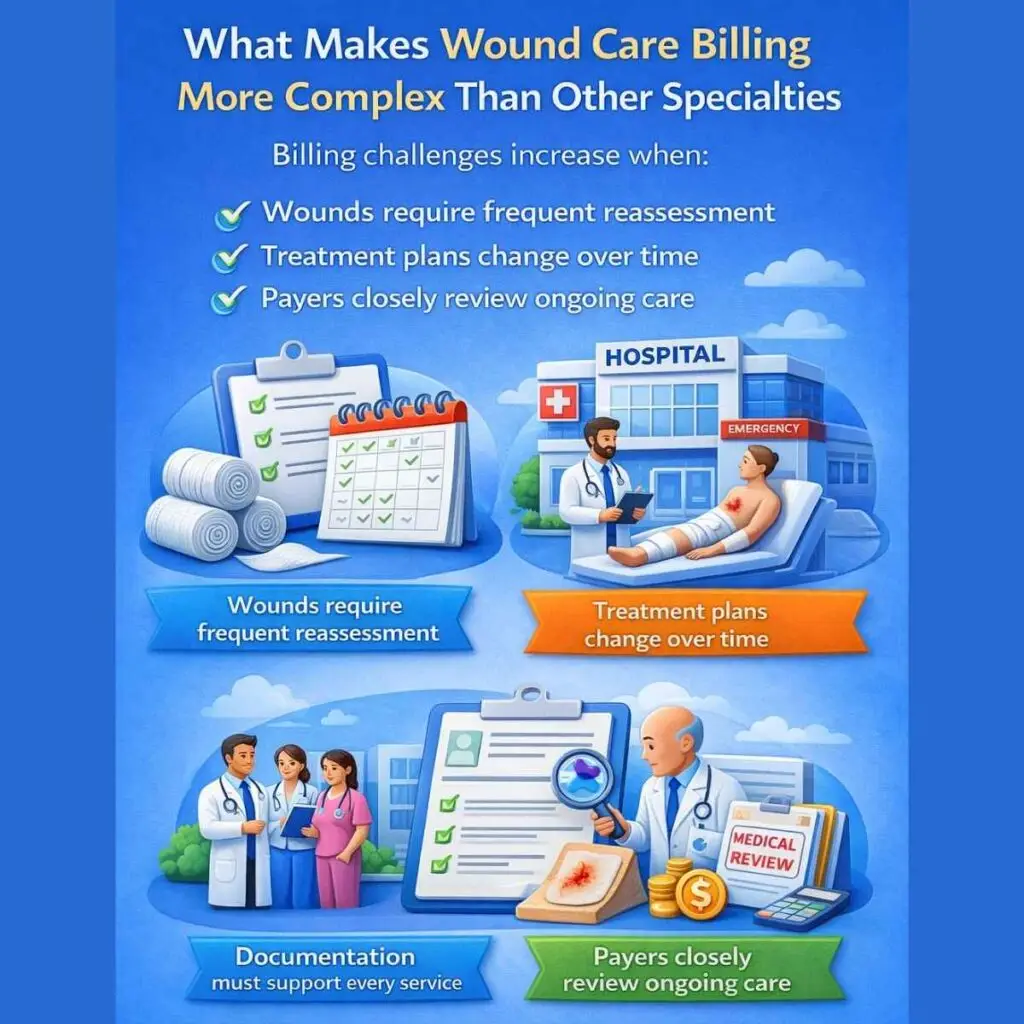
What Makes Wound Care Billing More Complex Than Other Specialties
Wound care billing is different from routine medical billing because patients often require multiple visits over an extended period. Each visit must clearly show progress, treatment response, and medical necessity.
Billing challenges increase when:
- Wounds require frequent reassessment
- Treatment plans change over time
- Payers closely review ongoing care
- Documentation must support every service
Without specialized billing expertise, practices often experience revenue loss even when care is delivered correctly. Outsource wound care billing services to the experienced Wound Care Company MDBC Pro.
Why Accurate Wound Care Billing Is Critical for Practice Revenue
Wound care services usually represent a high-value revenue stream, but they are also among the most frequently denied claims. Incorrect billing directly affects cash flow and operational stability.
Proper wound care medical billing helps practices:
- Receive full reimbursement for complex services
- Reduce claim rejections and resubmissions
- Shorten payment turnaround times
- Improve long-term financial predictability
Accurate billing ensures providers are paid fairly for the care they provide
The Role of Documentation in Successful Wound Care Billing
Clear and consistent documentation is the foundation of wound care billing. Payers expect detailed clinical notes that explain why treatment is necessary and how the wound is progressing.
Strong documentation should reflect:
- Wound size, depth, and stage
- Treatment methods used
- Patient response to care
- Justification for continued treatment
We align billing processes with clinical documentation to ensure claims are supported from the start.
Medical Coding Requirements in Wound Care Billing
Wound care coding requires precision. Codes must correctly represent the type of wound, the level of treatment, and the complexity of care provided.
Our wound care billing specialists focus on:
- Correct use of CPT, ICD-10, and HCPCS codes
- Accurate reporting of wound measurements
- Proper selection of debridement codes
- Compliance with CMS and payer-specific rules
Accurate coding reduces denials and protects practices from audits.
Medical Necessity and Payer Expectations in Wound Care Claims
Medical necessity is one of the most common reasons wound care claims are denied. Payers closely review whether continued treatment is justified based on patient progress.
We support medical necessity by:
- Matching documentation to payer coverage policies
- Ensuring progress notes explain treatment decisions
- Reviewing records before claims are submitted
This proactive approach strengthens claims and improves approval rates.
Insurance Eligibility and Authorization in Wound Care Billing
Many wound care treatments and supplies require insurance verification and prior authorization. Missing these steps can lead to unpaid claims and patient billing issues.
Our wound care billing services include:
- Insurance eligibility verification
- Authorization requirement checks
- Payer coverage validation
Handling these steps early prevents avoidable denials.
Denial Management for Wound Care Billing
Denied wound care claims often require detailed clinical explanations during appeals. Generic appeal responses rarely succeed.
Our denial management process includes:
- Identifying the exact cause of denial
- Strengthening claims with supporting documentation
- Submitting detailed payer-specific appeals
- Tracking appeal outcomes to prevent repeat issues
This approach improves recovery rates and reduces future denials.
Accounts Receivable Management for Wound Care Practices
Delayed payments are common in wound care billing due to payer reviews and audits. Active accounts receivable management is essential to maintain steady cash flow.
Our AR management process focuses on:
- Monitoring unpaid and underpaid claims
- Following up with payers consistently
- Reducing aging accounts
- Resolving payment delays quickly
This ensures predictable revenue without increasing staff workload.
Billing Challenges with Advanced Wound Care Treatments
Advanced wound care therapies require additional documentation and billing accuracy. Errors often lead to underpayment or claim rejection. Each claim is thoroughly reviewed to ensure accurate coding, proper documentation, and full compliance with Medicare and commercial payer guidelines.
Our detailed verification for process helps secure correct reimbursement, reduce denials, and improve clean claim rates for stronger, more predictable cash flow. We manage billing for:
Surgical and selective debridement
Accurate billing for surgical debridement (11042–11047) and selective debridement (97597–97598) requires proper depth documentation and tissue type reporting to prevent denials and underpayment.
Chronic and non-healing wound treatments
Billing for chronic wound management may include active wound care (97597–97598) and evaluation services (99202–99215), requiring clear medical necessity documentation to ensure reimbursement.
Hospital outpatient wound care services
Hospital outpatient wound care billing and wound care coding services involve procedure codes such as 11042–11047 and facility-specific revenue codes, requiring precise documentation to meet payer compliance standards.
Specialized wound care programs
Advanced wound care programs, including skin substitute grafts (15271–15278) and application procedures, require detailed coding, modifier accuracy, and strict payer guideline compliance to avoid rejections.
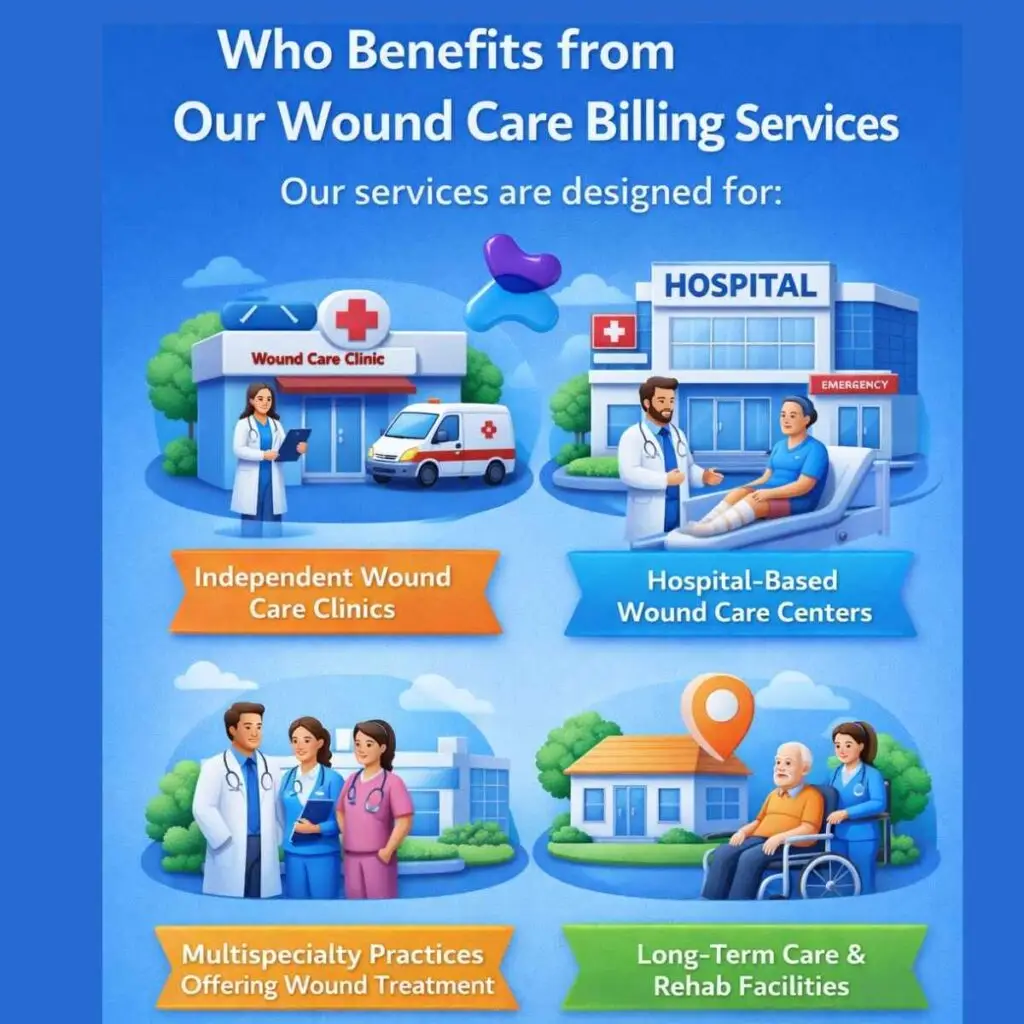
Who Benefits from Our Wound Care Billing Services
Our services are designed for:
- Independent wound care clinics
- Hospital-based wound care centers
- Multispecialty practices offering wound treatment
- Long-term care and rehabilitation facilities
We tailor billing workflows based on practice size, payer mix, and service complexity.
Why Practices Choose MDBC Pro Wound Care Billing Company
We focus on specialty expertise rather than generic billing support. MDBC Pro’s goal is to improve revenue while reducing administrative stress.
Practices choose us because we provide:
- Specialized wound care billing knowledge
- Lower denial and rejection rates
- Strong compliance and audit support
- Scalable billing solutions without hiring in-house staff
Partner with a Reliable Wound Care Billing Services Provider, MDBC Pro
If you’re looking for a trusted wound care billing and coding partner near you, MDBC Pro can support your practice with proven revenue cycle solutions. Our experienced team specializes in accurate CPT and ICD-10 coding, compliant claim submission, denial management, and proactive AR follow-up to help wound care providers increase reimbursements and reduce revenue delays.
Contact MDBC Pro today to simplify your revenue cycle, strengthen cash flow, and partner with a professional wound care billing firm focused on measurable financial growth.
The Importance of Accurate Wound Care Documentation
Accurate and detailed documentation is the backbone of successful wound care billing. It provides the necessary justification for treatments, ensuring that all services rendered are supported by clear evidence. Proper documentation helps to avoid claim denials and supports reimbursement by clearly demonstrating the medical necessity of the care provided.
Understanding Wound Care Billing Codes: CPT, ICD-10, and HCPCS
Wound care billing requires precise coding using CPT, ICD-10, and HCPCS codes. These codes reflect the specific procedures, diagnoses, and treatments involved. Correctly applying these codes is crucial in ensuring reimbursement for services like debridement and chronic wound management, reducing the risk of claim rejections and payment delays.
How to Ensure Medical Necessity in Wound Care Billing
Medical necessity is a common reason for wound care claims being denied. To ensure claims are approved, documentation must clearly match payer requirements, including evidence of wound progression and the need for ongoing care. By aligning treatment plans with payer coverage policies, practices can improve their claim approval rates and reduce the likelihood of denials.
Navigating Insurance Verification and Prior Authorization for Wound Care
Insurance verification and prior authorization are critical steps in wound care billing. Ensuring that a patient’s coverage is confirmed before treatment and obtaining the necessary authorizations can prevent claim denials and payment delays. This proactive approach ensures that treatment is covered and that there are no unexpected financial burdens for patients or the practice.
Proactive Denial Management for Wound Care Billing
Denial management is essential in wound care billing. By identifying the reasons for claim denials and addressing them promptly, practices can recover lost revenue and prevent future rejections. A thorough denial management process involves reviewing documentation, correcting errors, and submitting appeals with detailed supporting information to increase the chances of approval.
Billing for Advanced Wound Care Treatments
Billing for advanced wound care treatments, such as surgical debridement or skin substitute applications, requires careful documentation and adherence to payer-specific rules. Each procedure demands accurate coding and justification to ensure that complex treatments are reimbursed correctly, reducing the risk of underpayment or claim rejection.